
Elaiza Torralba

Writer specializing in health communications | Reporter | Public health advocate

Bridging the Gap: Finding Balance and Resilience Through Local Cancer Care

For Maria Koslosky, a long-time resident of Dillon, Montana, a cancer diagnosis was more than just a health crisis; it was a direct threat to the active life she had built for herself. Living with her husband, a local high school teacher, Maria has dedicated her years to staying active, raising three children, and maintaining a deep commitment to her career as a chief quality and compliance officer.
In 2022, after being diagnosed with lung cancer following a persistent post-COVID cough, Maria...
The Vital Connection: Keeping Care Close to Home

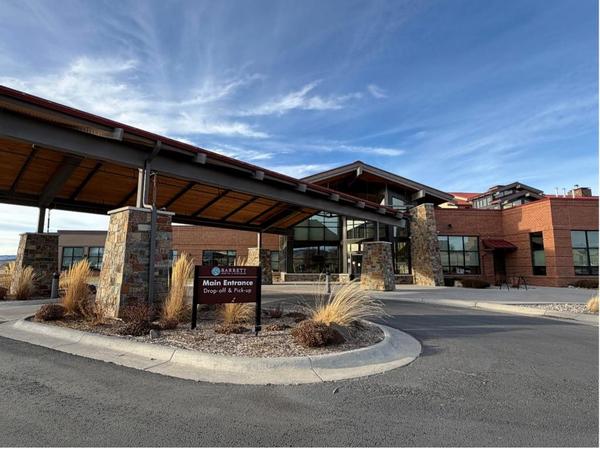
For patients in the frontier region of southwest Montana, the distance between home and life-saving treatment is measured in more than just miles—it’s calculated in “time toxicity,” physical strain, and the burden of extensive travel.In September 2024, Barrett Hospital & HealthCare opened a new cancer clinic and infusion center in Dillon, Montana to bridge this gap through a uniquely integrated care delivery model. This initiative is a formal partnership between Barrett Hospital and Bozeman Heal...

New Reports Assess Oncology Workforce Well-being, Propose Solutions to Address Burnout - ASCO

Physician burnout has increased significantly in the last decade and organizational strategies are vital to improve physician well-being, according to new research from the American Society of Clinical Oncology (ASCO). This compilation includes reports on the state of professional well-being among oncologists in 2023, burnout trends among oncology fellows in training, strategies to improve professional wellness, a policy brief describing past efforts to improve oncology workforce well-being and...

Medicaid and Cancer Care: ASCO Is Working to Preserve Critical Cancer Care Coverage

Since the passage of the Affordable Care Act, Medicaid has become a vital component for improving cancer prevention, early detection, and treatment nationwide. The states that have expanded Medicaid, 41 in total, along with the District of Columbia, have seen clear positive results. Research demonstrates that these expansion states have higher health coverage rates for residents with a history of cancer compared to non-expansion states. This improved access to timely screenings has, in turn, led...

New ASCO Report Explores US Medical and Hematology Oncologist Workforce - ASCO

A new report from the American Society of Clinical Oncology (ASCO) indicates a growing challenge in cancer care access, driven by a widening gap between the number of available oncologists and increasing patient demand.
The 2025 State of the Hematology and Medical Oncologist Workforce in America report and snapshot, published October 7, highlights where cancer care is available across the country and identifies potential future gaps. The report is part of ASCO's State of Cancer Care in America S...

Making Clinical Trials More Accessible: New Report Highlights Barriers and Solutions - ASCO

Clinical trials remain out of reach for many Americans, with only 7% of patients with cancer participating in clinical trials, according to a new report from the American Society of Clinical Oncology’s (ASCO) State of Cancer Care in America series.
Experts agree that access to trials is a key element in driving progress in cancer care and improving patient outcomes. The study, published in JCO Oncology Practice, highlights long-standing barriers to trial participation and highlights efforts to b...

New Reports Assess Oncology Workforce Well-being, Propose Solutions to Address Burnout

Physician burnout has increased significantly in the last decade and organizational strategies are vital to improve physician well-being, according to new research from the American Society of Clinical Oncology (ASCO). This compilation includes reports on the state of professional well-being among oncologists in 2023, burnout trends among oncology fellows in training, strategies to improve professional wellness, a policy brief describing past efforts to improve oncology workforce well-being and...

Increasing Access to High-Quality Cancer Care in Rural Communities

ASCO is committed to helping ensure every patient, everywhere, has access to high-quality and equitable cancer care. In 2022, the Society launched a multiyear pilot program to increase access to cancer care in rural Montana. This program enables patients to receive cancer care in their own community through a hub-and-spoke care delivery model, a proven method of extending access to cancer care in rural and remote areas. The initiative, which aligns with the Montana Cancer Coalition’s comprehensi...

Expanded Oncology Summer Internship Program Targets Increased Workforce Diversity

Alexandria, Va. – Today the American Society of Clinical Oncology (ASCO) announced four additional medical schools have been selected to participate in the Society’s Oncology Summer Internship (OSI) Program.
Launched in 2021, the OSI introduces rising second-year medical students primarily from populations underrepresented in medicine (UIM) to the field of oncology.1 The immersive program, which is part of ASCO’s efforts to strengthen and diversify the oncology workforce, began as a cohort of fi...

ASCO Details Top Policy Priorities to Address Social Determinants of Health and Improve Health Equity in Cancer Care

Alexandria, Va.—The American Society of Clinical Oncology (ASCO) released a policy statement highlighting the top policy changes necessary to advance health equity in cancer care.
The statement, published in this month’s edition of JCO Oncology Practice, examines how social determinants of health (SDOH) can impact a patient’s access to cancer care and outcomes. These factors include a person’s access to food, housing, transportation, their experience with discrimination, their educational attain...

Pilot Program Launching to Increase Access to Cancer Care for Rural Montanans

Alexandria, VA. – Building on its longstanding commitment to health equity, the American Society of Clinical Oncology (ASCO) is launching a multi-year pilot program to increase access to high-quality, equitable cancer care in rural Montana. The ASCO pilot program will enable patients to receive cancer care in their own community through a hub-and-spoke care delivery model, a proven method of extending access to cancer care in rural and remote areas.1 This initiative, which aligns with the Montan...

Citizenship, policy barriers limit access to health care for some California Latino, Asian immigrants

Two new studies by the UCLA Center for Health Policy Research explore the link between citizenship status and access to health care among Latino and Asian immigrants in California. The studies are part of the center’s Research on Immigrant Health and State Policy Study, or RIGHTS, which analyzed the experiences of Latino and Asian immigrants in the state from 2018 to 2020.

In the first study, researchers compared job opportunities and workplace conditions for immigrants based on whether they ha

UCLA study spotlights gaps in health care access among California’s LGBT community

Lesbian, gay, bisexual and transgender adults in California face significant barriers in accessing health care despite having similar or better rates of health insurance coverage than heterosexual or cisgender adults, a new UCLA report shows.

These barriers include a lack of timely access to needed care, not having a usual source of care, having trouble finding providers and experiencing unfair treatment, according to researchers from UCLA’s Center for Health Policy Research and Williams Instit

Despite overall gains in health coverage and access to care, disparities persist in California

As of 2020, more than 2.5 million Californians age 64 and under had no health insurance coverage, according to a study by the UCLA Center for Health Policy Research.

The report is based on an analysis of the center’s California Health Interview Survey from 2019 and 2020.

The researchers analyzed insurance rates in California. They found that adults aged 19 to 25 had the lowest rates of employment-based insurance (51.7%, compared to 61% to 66% for other age groups), even though they can remain

Nearly half of California caregivers experienced financial stress during 2020

In 2020, an estimated 6.7 million Californians provided care for a family member or friend with a serious or chronic illness or disability. According to a study by the UCLA Center for Health Policy Research, 44.4% of those caregivers reported experiencing some level of financial stress due to their roles, and 13.5% experienced a physical or mental health problem due to their caregiving work.

In the study, which used data from the center’s 2020 California Health Interview Survey, UCLA researcher

In UCLA survey, most California Latino, Asian immigrants perceive racial discrimination at work

In reports published today by the UCLA Center for Health Policy Research, 70% of Latino and Asian immigrants said they perceived that immigrants in California experienced discrimination at work due to their skin color or accent.

The survey of 2,000 immigrants living in California also found that 65% felt — incorrectly in some cases — that immigrants would be prevented from gaining legal U.S. immigration status if they used government benefits such as income assistance, health care, food program

Women are not receiving needed mental health care through state’s public programs

Among women in California who have recently experienced mild to moderate psychological distress and are eligible for public health services, 4 out of 5 said they received no treatment, a report published today by the UCLA Center for Health Policy Research shows.

Those who qualify for these public services — a third of all women over the age of 18 — were also more likely than their privately insured counterparts to have experienced moderate or serious psychological distress (31% vs. 21%), accord

UCLA research reveals how a year of change affected Californians’ health

Although more Californians than ever had health insurance in 2020, disparities in access to health care among the state’s racial and ethnic groups was magnified during a year of unprecedented challenges and changes.

Those are among the key findings of the latest California Health Interview Survey, which is conducted by the UCLA Center for Health Policy Research. The survey included responses from 22,661 California households, including 21,949 adults, 1,365 adolescents and 3,548 children.

“This

Mental health needs might not be met among California’s Latino and Asian communities

A pair of new UCLA studies suggest that mental health needs for some ethnic communities may be going unmet in part because people in those groups don’t see themselves as needing care — despite the fact that they are reporting in surveys that they are experiencing symptoms of mental health distress.

The studies, by the UCLA Center for Health Policy Research, are based on data from the center’s own California Health Interview Surveys from 2015 to 2019.

As part of the surveys, researchers asked C

Report identifies barriers to accessing dental care for low-income Californians

A policy brief by the UCLA Center for Health Policy Research identifies three of the most important factors that have led to disparities in Californians’ access to dental care.
• None There are fewer dentists per capita in some parts of the state.
• None About 79% of the state’s dentists did not provide care for low-income patients who rely on Medi-Cal.
• None Only 8% of the state’s dentists are Latino or Black, compared with 60% of the state’s low-income adult population overall.

The authors a

UCLA analysis reveals need to break down COVID-19 data for ethnic subgroups

According to a new UCLA report, COVID-19 death rates for Californians from Native Hawaiian, Pacific Islander and Asian ethnic groups varied widely in 2020.

But those variations were not readily apparent to the public because federal and state reports generally present COVID-19 data for all of those groups as a whole, rather than for each of the subgroups individually.

The study, by the UCLA Center for Health Policy Research, suggests that breaking out the data for each of the racial and ethnic

UCLA report provides close look at state’s Whole Person Care pilot health program

Findings may inform models to improve health care quality and outcomes for high-need, at-risk groups

California in 2016 introduced its Whole Person Care program, a pilot project designed to integrate medical, behavioral health and social services for Medi-Cal patients who frequently accessed health services, incurred disproportionately high costs and had poor health outcomes.

With that program scheduled to end next year, the UCLA Center for Health Policy Research has published a policy brief t

Breaking down barriers to care for metastatic breast cancer patients

Drawing on a series of studies and interviews with patients and caregivers, UCLA researchers from the UCLA Center for Health Policy Research and the UCLA Jonsson Comprehensive Cancer Center have published recommendations for California policymakers and patient advocates aimed at improving care and outcomes for women with metastatic breast cancer.

More than 30,000 women in California are diagnosed each year with this cancer, which has spread from the breast to other parts of the body. Survival r

How immigration policies can harm health: Study sheds light on ‘public charge’ rule

Immigration policies like the Trump-era expansion of the “public charge” rule that made it harder for immigrants on public assistance to obtain legal residency can have a chilling effect on the health and well-being of immigrant communities in California, according to a study released today by the UCLA Center for Health Policy Research.

The study, based on data from the center’s 2019 California Health Interview Survey, shows that 1 in 4 low-income immigrant adults in the state have avoided acce
Load More

Contact Me

My inbox is always open, you can contact me with the contact form here